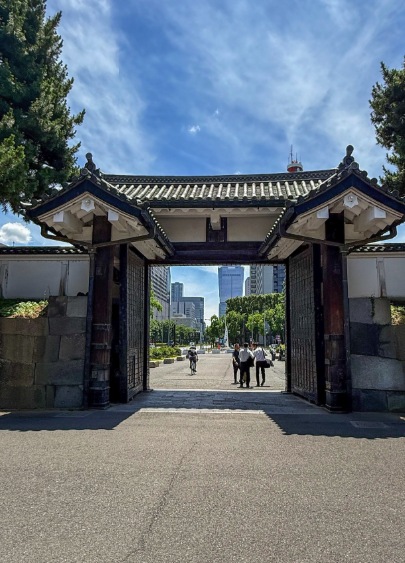
The Imperial Palace Tokyo sits at the geographical and symbolic centre of the city — 3.41 square kilometres of forests, moats, and ancient stone walls in the middle of the most expensive real estate on earth. And unlike most of the world's imperial or royal residences, a significant portion of it is free to visit.
This guide covers everything you need to plan your visit: which parts are open, what requires advance registration, how to get there, when to go, and what a guided tour adds that a self-guided walk cannot. All information is verified from the Imperial Household Agency as of June 2026.
What You Can Visit — and What You Cannot
The Imperial Palace grounds divide into three zones with different access rules:
1. The East Garden (Kokyo Higashi Gyoen) — Free, No Booking
The East Garden is the former inner compound of Edo Castle — the Honmaru and Ninomaru enclosures — and it has been open to the public free of charge since 1968. This is where the historic structures are: the Tenshukaku donjon ruins, the three surviving Edo-era guardhouses, the Ninomaru Garden, the Tokagakudo Concert Hall, and several historic gates. No ticket, no registration, no fee. Walk in, subject to a routine bag check.
The East Garden is closed on Mondays and Fridays (or the next weekday if those fall on a national holiday), December 28 to January 3, and occasional Imperial Court event days with no advance notice. Many Tokyo visitors — especially those on short 2- or 3-day itineraries — get caught by the Friday closure. Check the official calendar at kunaicho.go.jp before you travel.
2. The Inner Palace Grounds — Free, Registration Required
The Imperial Household Agency runs a free guided tour of the inner palace grounds twice daily (Tuesday to Saturday, approximately 10:00 and 13:30). This takes you through the outer area of the inner palace — past the Seimon Ishibashi (main gate bridge area) and with exterior views of the Kyuden — but does not enter any palace buildings. Valid photo ID is mandatory. Maximum 200 participants per session online; 300 walk-in. Register at sankan.kunaicho.go.jp.
3. The Fukiage Gardens (Emperor's Residence) — Not Accessible
The private residence of Emperor Naruhito and Empress Masako is entirely closed to the public. The only exceptions are the two annual public greeting events: January 2 (New Year) and February 23 (Emperor's Birthday), when crowds can enter the front area of the inner grounds for imperial appearances from the Chokoden balcony.
Opening Hours — East Garden
| March 1 – April 14 | 9:00 – 17:00 (last admission 16:30) |
| April 15 – August 31 | 9:00 – 18:00 (last admission 17:30) |
| September | 9:00 – 17:00 (last admission 16:30) |
| October | 9:00 – 16:30 (last admission 16:00) |
| November – February | 9:00 – 16:00 (last admission 15:30) |
Admission closes 30 minutes before the garden closing time — do not arrive in the final hour if you want to explore properly.
How to Get There
From Tokyo Station (15 minutes on foot)
Exit via the Marunouchi Central Exit — the western exit facing the palace. Walk straight down Gyoko-dori avenue until it ends, then turn right to reach the Ōte-mon Gate (the main East Garden entrance). This is the most direct route and requires no transfer. Japan Rail Pass holders can use this exit directly.
By Metro
- Nijubashi-mae Station (Tokyo Metro Chiyoda Line, Exit 6) — 10 minutes' walk to the East Garden entrance
- Otemachi Station (Mita, Tozai, Chiyoda, and Hanzomon Lines, Exit D2) — 10 minutes' walk to the East Garden
Guided Tour Meeting Point
Third-party walking tours of the Imperial Palace depart from Wadakura Fountain Park (3-1 Kōkyogaien, Chiyoda City) — look for your guide holding a company sign near the Starbucks Coffee at the agreed time. This is 10 minutes from both Otemachi Station (Exit D2) and Nijubashi-mae Station (Exit 6).
The Marunouchi Central Exit at Tokyo Station puts you on the palace side of the station, which is not the default exit most visitors use. When you arrive at Tokyo Station, follow signs for "Marunouchi" rather than "Yaesu" to end up facing the palace. It saves 10 minutes of backtracking around the station building.
The Three Entrances to the East Garden
The East Garden has three public entry gates. Each has different character and proximity to different parts of the city:
Ōte-mon Gate (Main Entrance)
The formal front gate of Edo Castle — closest to Tokyo Station and Nijubashi-mae Station. Most guided tours enter here. The gate retains its original masugata (square courtyard) defensive design. The main information board and stamp station are located just inside this gate.
Hirakawa-mon Gate (North Entrance)
Historically the service entrance for daily goods — quieter than Ōte-mon, especially on busy weekends. Closest to Otemachi Station. Retains its original wooden doors and the masugata enclosure.
Kitahanebashi-mon Gate (North Entrance)
The third entrance, near the Kitanomaru Park boundary. Named for the drawbridge system that once crossed the moat here. Useful if approaching from Kudanshita Station or arriving after a Chidorigafuchi moat walk.
What to See Inside the East Garden
The East Garden covers the former inner compound of Edo Castle. A self-guided visit takes 1.5 to 2 hours; a guided tour runs 2 to 2.5 hours. The main sites are:
- Tenshukaku Donjon ruins — the stone base of the five-tiered main keep, burned in 1657 and never rebuilt. Climbable; panoramic view from the top.
- Three Edo guardhouses — Doshin-bansho, Hyakunin-bansho, and Ōban-sho. Each represents a different tier of the Tokugawa social hierarchy.
- Ninomaru Garden — a traditional Japanese strolling garden on the site of the former secondary compound. Pond, stone lanterns, tea arbour.
- Tokagakudo Concert Hall — 1966 mosaic-covered building constructed for Empress Kojun's 60th birthday.
- Fujimi-yagura Keep — one of three surviving original Edo Castle towers. Built 1659.
For a full breakdown of every structure, see our architecture guide.
The East Garden's Tenshukaku stone base is the platform where Japan's tallest building once stood. The five-tiered keep completed in 1638 was larger than any surviving Japanese castle keep today — larger than Himeji, larger than Matsumoto. The decision not to rebuild it after the 1657 Meireki Fire was a deliberate political choice, not simply lack of resources.
Self-Guided vs Guided Tour — Honest Comparison
The East Garden is fully accessible without a guide. The information panels are in Japanese and English. For a casual visit to a beautiful historic garden in central Tokyo, self-guided is entirely valid.
However: most of what makes the Imperial Palace East Garden historically significant is invisible without context. The three guardhouses look like modest historic buildings unless someone explains the rank hierarchy encoded in their positions. The Tenshukaku base is a pleasant viewpoint unless you understand what it communicates about Tokugawa power after the fire. The gate design only reveals its military genius when you hear what a masugata courtyard was designed to do.
A guided tour costs from $16 per person and runs 2 hours. The Shogun Historical Walking Tour — the highest-rated dedicated palace tour, with 2,922 reviews averaging 4.9 stars — costs $22 per person for a maximum group of 15. That is the dividing line: if the history matters to you, book a tour. If you are happy with a pleasant open-air walk, self-guide.
Best Time to Visit
Season
Late March to early April is the most visually dramatic period — the cherry blossom row along Chidorigafuchi moat is one of Tokyo's signature sights — but also the most crowded. October to November brings Japanese maple colour to the Ninomaru Garden with far smaller crowds. Winter (January to February) is quiet, clear, and on the right day offers a view of Mount Fuji from near the Fujimi-yagura Keep.
Day of the Week
Tuesday, Wednesday, and Thursday are the quietest. Saturday is busy; Sunday busier still from late morning. Avoid Monday and Friday — the garden is closed. If your Tokyo itinerary only has one free day that falls on a Friday, plan to spend the morning at Kitanomaru Park and the Chidorigafuchi moat walk instead.
Time of Day
Arrive at opening (9:00) for the least crowded East Garden experience. Guided tours typically depart 9:30 to 10:00. Avoid arriving in the 90 minutes before closing — you will be ushered toward the exits before you have finished exploring.
The East Garden does not have a café inside. Bring a sealed water bottle, especially April through September when temperatures and humidity are high. The Sōmeikan rest area near the Ninomaru Garden has limited refreshments. Starbucks at Wadakura Fountain Park (the guided tour meeting point) is 5 minutes from the Ōte-mon Gate and makes a convenient pre-visit stop.
What to Bring
- Valid photo ID — required if you plan to join the official Imperial Household Agency inner-grounds tour (passport, driver's licence, or student card; photocopies not accepted)
- Comfortable walking shoes — the garden has paved paths and gravel sections; the main route is approximately 2.2 km
- Sun protection — the East Garden is largely open and exposed; hats and sunscreen are essential from April through September
- A charged phone — the garden's signage is good but an offline map helps with the gate connections
Booking a Guided Imperial Palace Tour
All Imperial Palace tours on this site include a local English-speaking guide, free cancellation up to 24 hours in advance, and no separate admission fee (the East Garden is free). Tours start from $16 per person.
For most visitors, the Shogun Historical Walking Tour ($22, 2 hours, max 15 guests) is the right choice. For families with strollers or visitors with mobility considerations, the Edo Castle Garden Walking Tour ($35, 2.5 hours, fully wheelchair accessible) is designed specifically with accessibility in mind. For those who want complete flexibility and a guide for their group alone, the East Gardens Private Tour ($35) is the dedicated private option.