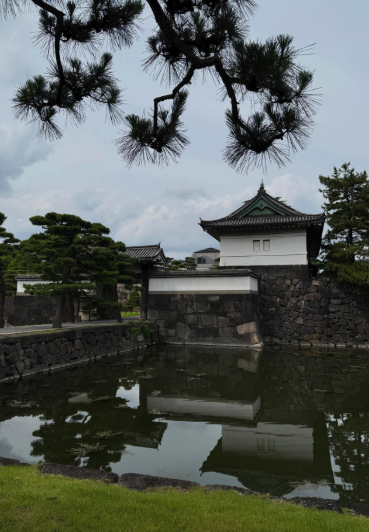
The Imperial Palace and Meiji Shrine are frequently mentioned in the same breath — both are major Tokyo sites, both are free, both are associated with Emperor Meiji, and both occupy significant green space in the city centre. But they are fundamentally different experiences, and the choice between them depends almost entirely on what you want from a visit.
This guide compares them directly across the factors that matter most for planning: what you actually see, how long it takes, how crowded it gets, what requires a guide, and which site rewards which kind of visitor.
The Quick Comparison
| Factor | Imperial Palace East Garden | Meiji Shrine |
|---|---|---|
| Founded | 1457 (Edo Castle); Imperial seat from 1868 | 1920 (built after Emperor Meiji's death in 1912) |
| Type | Historic castle ruins + garden | Shinto shrine + forested approach |
| Admission | Free (East Garden) | Free (inner grounds); ¥1,000 inner garden |
| Closed days | Mon, Fri, Dec 28–Jan 3 | Open daily year-round |
| Self-guided time | 1.5–2 hours | 45–75 minutes |
| Guided tour | Yes — from $16 · 2–2.5 hrs | Yes — typically 1–2 hrs as part of Tokyo tour |
| Peak crowds | Cherry blossom (late Mar–Apr), weekends | New Year (Jan 1–3), weekends year-round |
| Best season | Spring (blossoms) or autumn (maples) | Autumn for iris garden; year-round for forest |
| Primary draw | 600 years of Japanese history; castle ruins; Edo architecture | Forested Shinto atmosphere; imperial memorial; serene approach walk |
| What you see | Stone ruins, guardhouses, keep base, garden, surviving towers | Torii gates, forested path, main shrine hall, ema votive boards |
| Stroller accessible | Yes (main route) | Yes (main path); gravel on approach |
| Nearest station | Nijubashi-mae (10 min walk) | Harajuku/Meiji-jingumae (5 min walk) |
| Tokyo area | Central (Chiyoda) | West (Shibuya/Harajuku) |
What You See — The Core Difference
The Imperial Palace East Garden
The East Garden is the former inner compound of Edo Castle — the seat of the Tokugawa shogunate from 1603 to 1868. What you see here is the accumulated physical record of 400 years of Japanese military and imperial history: stone walls built with daimyo labour, three surviving Edo-era guardhouses encoding the Tokugawa social hierarchy, the stone base of Japan's once-tallest building, and the Ninomaru Garden on the site of the former secondary compound.
Nothing at the Imperial Palace East Garden is theatrical or staged. What survives, survives because it was built to last. The site rewards attention and context — the more you know, the more you see. A guided Imperial Palace tour makes a decisive difference here.
Meiji Shrine
Meiji Shrine is a Shinto shrine built in 1920 to commemorate Emperor Meiji (1852–1912) and his wife, Empress Shōken. The approach — a 700-metre tree-lined path through dense secondary forest — is the signature experience. The torii gates (the largest of which is 12 metres high), the votive ema boards, the main shrine building, and the Meiji Jingu Inner Garden are the primary destinations.
The atmosphere at Meiji Shrine is contemplative and spiritual in a way the Imperial Palace is not. The forest was planted after the shrine's completion and now contains over 100,000 trees from across Japan — the same tree-contribution model used at the Imperial Palace grounds. The experience is less about specific historical knowledge and more about presence, atmosphere, and the contrast between the forested sanctuary and the surrounding city.
Both sites are connected to Emperor Meiji — the monarch who moved from Kyoto to the Imperial Palace in 1868 and modernised Japan. The palace is where he lived and worked. The shrine was built after his death to honour his memory. Visiting both on the same trip effectively tells the complete Meiji story: the seat of power that transformed Japan, and the memorial that subsequent generations built to mark what he represented.
Crowds and Timing
Imperial Palace East Garden
The East Garden sees its heaviest crowds during cherry blossom season (late March to early April) and autumn weekends. The Chidorigafuchi moat walk specifically — adjacent to the palace grounds — is one of Tokyo's most crowded cherry blossom viewing spots. Weekday mornings are significantly quieter. The Monday and Friday closures mean that the open days (Tuesday, Wednesday, Thursday, Saturday, Sunday) absorb all the weekly traffic.
Meiji Shrine
Meiji Shrine is busiest at New Year — it receives the largest number of hatsumode (first shrine visit of the new year) visitors of any shrine in Japan, often exceeding 3 million visitors in the first three days of January. Year-round, weekends are busy because of the proximity to Harajuku and Omotesando. The forested approach absorbs crowds better than the Imperial Palace, but the main shrine building plaza can feel congested on popular days.
If you're doing both in one day — and they combine well — visit the Imperial Palace first (it's closed Monday/Friday, so this determines your day's structure) and finish at Meiji Shrine in the late afternoon. The forested approach is particularly beautiful in the low light of late afternoon. The Harajuku/Omotesando area around the shrine also makes for a good dinner destination.
What They're Good For
Choose the Imperial Palace if you want:
- Japanese castle history and military architecture
- The Edo period and the Tokugawa shogunate story
- A guided walking tour with a local expert
- Specific structures to see and understand (the guardhouses, the keep ruins)
- The contrast between what Edo Castle was and what the Imperial Palace became
Choose Meiji Shrine if you want:
- A Shinto spiritual experience in a forested setting
- Atmosphere over architecture — the feeling of being inside the city's largest urban forest
- A contemplative, less structured visit
- A site that works well without prior knowledge or a guide
- The Harajuku neighbourhood as a complementary area
Can You Do Both in One Day?
Yes — and it is a good combination. The two sites are about 35 minutes apart by metro (Otemachi to Meiji-jingumae on the Chiyoda Line). A reasonable full-day itinerary:
- Morning (9:00–12:00): Imperial Palace East Garden — either self-guided or on a guided walking tour
- Lunch (12:00–13:00): Marunouchi area near Tokyo Station, or Otemachi
- Afternoon (13:30–15:30): Meiji Shrine approach, main shrine, inner garden
- Late afternoon (15:30–17:30): Harajuku, Takeshita Street, or Omotesando
The one constraint: the Imperial Palace East Garden closes Monday and Friday. If your Tokyo schedule only has one free day that falls on a Monday or Friday, Meiji Shrine is still available — the Imperial Palace is not.
Our Verdict
For first-time Tokyo visitors who want a single site: Meiji Shrine, because the atmospheric forested approach works without context and the surrounding neighbourhood is compelling. For visitors specifically interested in Japanese history or who plan to take a guided tour: the Imperial Palace, because the depth of what there is to understand there is significantly greater. For anyone staying 3+ days in Tokyo: visit both. They tell different and complementary parts of the same story.
A Note on the Full-Day Tokyo Tours
Several guided Tokyo tours combine both sites in a single itinerary — including the Full Tokyo Day Tour (Meiji Shrine, Imperial Palace, Asakusa & Skytree, from $40) which covers all four landmarks with a guide. If your Tokyo time is limited and you want maximum coverage, this is an efficient option. If you want depth at either site specifically, a dedicated tour of that site — or the Shogun Historical Walking Tour at the Imperial Palace — will serve you better.
For everything you need to plan your Imperial Palace visit, see our complete visitor guide and our East Garden zone guide.